
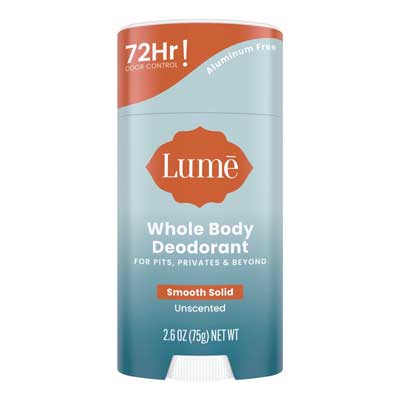
Lume is one of the most heavily marketed natural deodorants in the US. Created by OB/GYN Dr. Shannon Klingman and later acquired by Harry's Inc., it built its brand on a bold promise: 72-hour odor protection using mandelic acid, safe for your whole body.
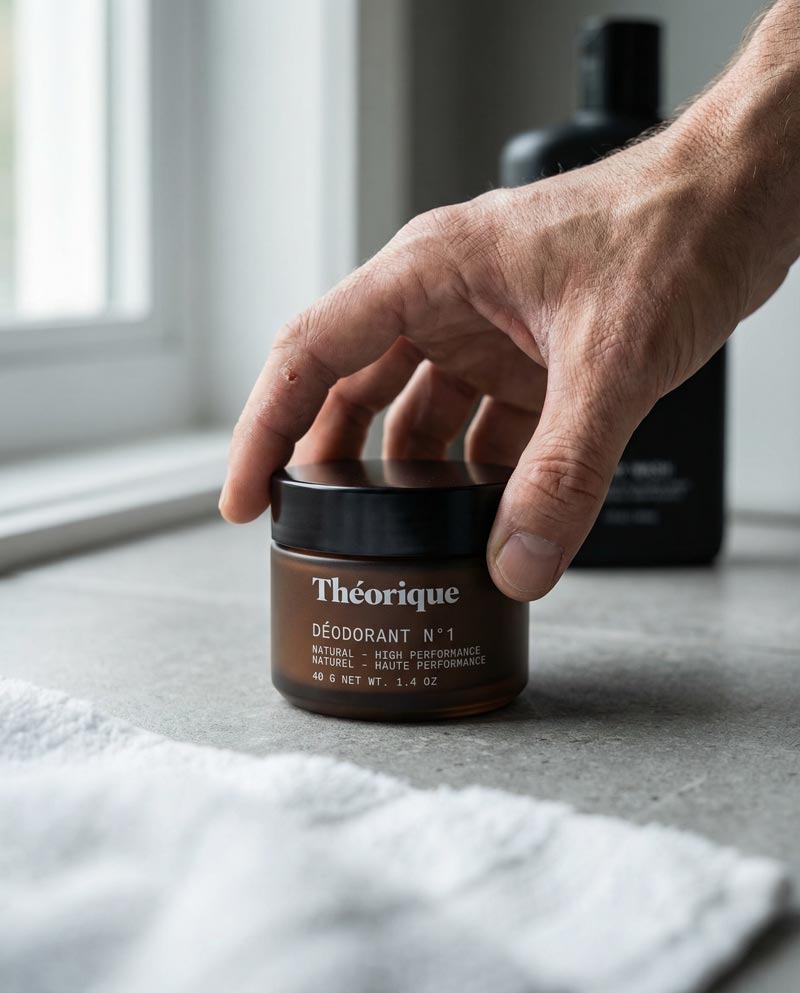
Théorique takes a fundamentally different approach. Instead of altering your skin's pH with an acid, it uses silver to kill odor-causing bacteria and zinc ricinoleate to trap odor molecules before they escape. It's formulated in Canada and tested in athletic conditions.
These are two very different strategies for the same problem. We compared the science, the ingredients, the complaints, and the policies to help you decide which one is worth your money.
The Quick Verdict
| Factor | Lume | Théorique |
|---|---|---|
| Odor Control Method | Mandelic acid lowers pH (single-action) | Silver + zinc ricinoleate (dual-action) |
| Active Lawsuits | Yes, false advertising + skin irritation | None |
| Irritation Reports | Widespread (burning, rashes, welts) | No significant reports |
| Unscented Smell | Sour/acidic odor complaints | Truly fragrance-free |
| 72-Hour Claim | Disputed, lawsuit filed | Claims 24-hour protection |
| Guarantee | 60 days (you pay return shipping) | 90 days, full money-back |
| Formulation | Contains synthetic ingredients | Natural ingredients, glass jar |
| Ownership | Harry's Inc. (corporate) | Independent, Canadian |
The Key Difference: How They Actually Work
This is the most important distinction between these two products, and it explains most of the problems Lume users experience.
How Lume Works: pH Manipulation
Lume's active ingredient is mandelic acid, an alpha-hydroxy acid (AHA). It works by lowering your skin's pH to create an environment where bacteria struggle to break down sweat into odor compounds.
This is a single-action approach: change the pH, hope bacteria can't function. The bacteria aren't killed. They're still there on your skin. They're just temporarily less active because the environment is more acidic than they prefer.
The problem? AHAs are chemical exfoliants. They're the same class of ingredients used in facial peels. Applied daily to sensitive areas like underarms, groin, and feet, they can cause burning, redness, and irritation in many users. This is exactly what Lume's class action lawsuits allege.
How Théorique Works: Dual-Action Elimination
Théorique attacks odor through two independent mechanisms:
- Silver + zinc oxide kill odor-causing bacteria directly. The bacteria are eliminated, not just slowed down.
- Zinc ricinoleate traps any odor molecules that form anyway, binding them before they can escape into the air.
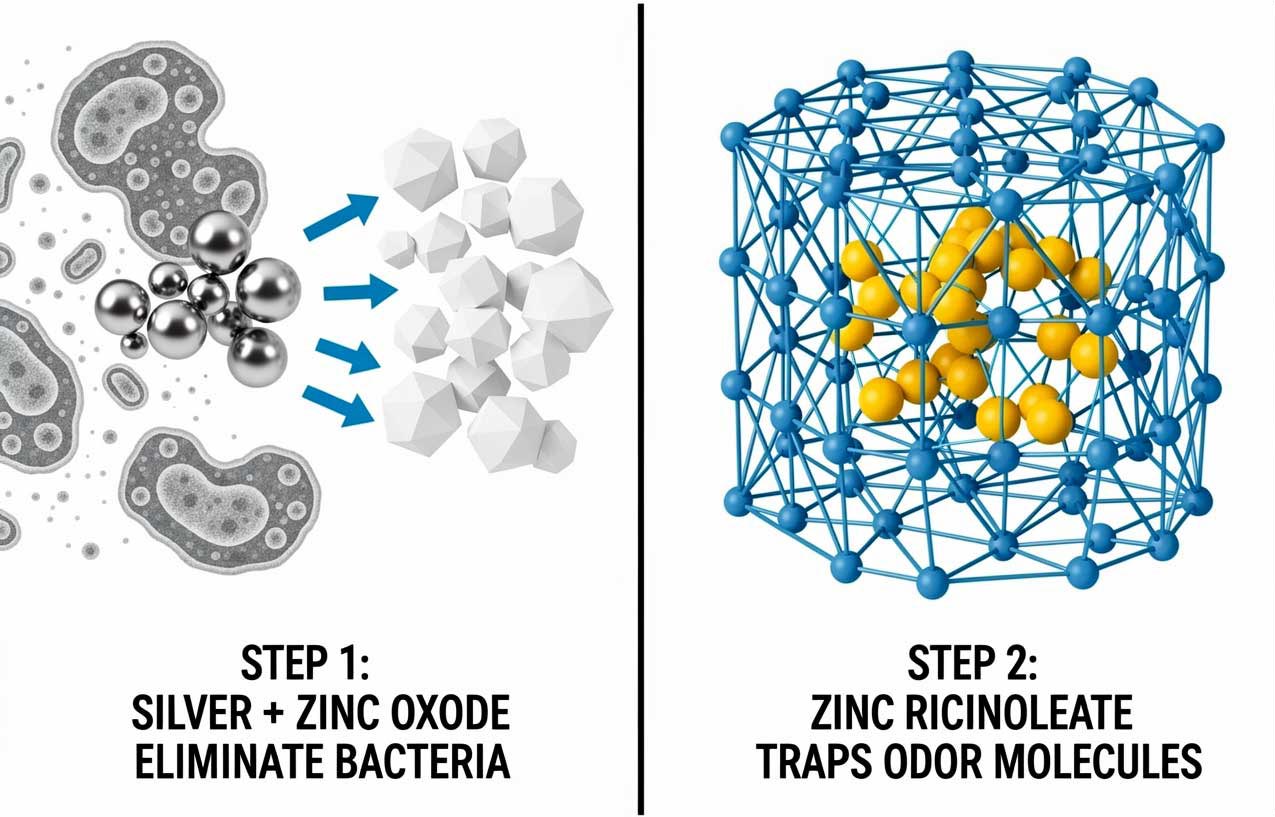
Théorique's PhD-formulated approach combines proven science with natural ingredients
Why does dual-action matter? Even the best antibacterial agent can't kill 100% of bacteria instantly. New bacteria arrive throughout the day. Zinc ricinoleate acts as a safety net, catching odor molecules from any bacteria that survive or repopulate. Lume has no equivalent backup system. If the pH shift wears off or your body chemistry neutralizes it, you're unprotected.
Neither approach blocks sweat. Both are deodorants, not antiperspirants. But the mechanisms are fundamentally different: Lume manipulates chemistry hoping to slow bacteria down, while Théorique kills bacteria and traps their byproducts.
The "Clean" Marketing Question
Lume markets itself as a cleaner alternative to conventional deodorants. Many natural lifestyle bloggers have called it a "natural deodorant." But when you look at the actual ingredient list, that characterization doesn't hold up.
Ingredients in Lume That Aren't Natural
What's Actually in Lume's Solid Stick
| Ozokerite | Petroleum-derived mineral wax |
| Neopentyl Glycol Diheptanoate | Synthetic emollient |
| PPG-15 Stearyl Ether | Synthetic conditioning agent |
| Isododecane | Synthetic hydrocarbon solvent |
| Ethylhexylglycerin | Synthetic preservative, known irritant |
| Fragrance | Synthetic fragrance (in scented versions) |
A 2025 class action lawsuit specifically called out Lume's "all natural" marketing as false and misleading, citing several of these synthetic ingredients.
What's in Théorique
Théorique Ingredients
- Jojoba Seed Oil
- Avocado Butter
- Tapioca Starch
- Zinc Ricinoleate
- Rice Bran Wax
- Stearyl Alcohol
- Zinc Oxide
- Tocopherol (Vitamin E)
- Silver (non-nano)
The Difference
Théorique publishes every ingredient: nine ingredients, all with a clear function.
No petroleum derivatives. No synthetic solvents. No synthetic preservatives. No synthetic fragrance.
To be clear: Lume is free of aluminum, baking soda, parabens, phthalates, sulfates, and talc. That's better than most drugstore deodorants. But calling it "natural" or "clean" is a stretch when the formula contains petroleum wax, synthetic solvents, and synthetic preservatives.
The Lawsuits
Lume has faced multiple legal challenges. These aren't frivolous complaints. They target core product claims.
Lawsuit #1: False Advertising (2023)
Nelson v. Lume Deodorant, LLC, filed May 2023 in the Eastern District of New York.
The lawsuit alleged Lume misleadingly marketed products as "clinically proven to block body odor all day, and continue to control odor for 72 hours" when the scientific evidence did not support this claim.
Truth in Advertising (TINA.org), a consumer watchdog, also flagged that Lume's "aluminum-free" marketing was misleading because aluminum is not found in any deodorants, only antiperspirants.
The case was voluntarily dismissed in December 2023, but the underlying concerns about the 72-hour claim persist across thousands of customer reviews.
Lawsuit #2: Skin Irritation & False "Natural" Claims (2025)
A second class action was filed in 2025 alleging skin irritation and false "all natural" marketing.
The complaint linked specific ingredients to reported irritation: mandelic acid (chemical exfoliant), ethylhexylglycerin (synthetic preservative), ozokerite (petroleum wax), and PPG-15 stearyl ether (synthetic conditioning agent).
Multiple users reported burning sensations, rashes, peeling skin, and painful welts, particularly when used on sensitive areas like the groin and underarms.
Théorique has no lawsuits, no regulatory complaints, and no widespread irritation reports. The formula contains no chemical exfoliants, no synthetic preservatives, and no petroleum derivatives.
The Unscented Smell Problem
This is one of the most common complaints about Lume, and it's directly related to the formula's mechanism of action.
Mandelic acid has a naturally pungent, acidic smell. In Lume's scented versions, synthetic fragrance masks this. But in the unscented version, users are left with the raw smell of the acid itself.
"The unscented version smells sour, almost like dirty diapers. I had to stop using it because the smell was worse than my actual body odor."
"It smells like feet. I know they say the smell fades after a few minutes, but I can still catch whiffs of it throughout the day."
Lume acknowledges this issue, stating the initial scent dissipates after a few minutes. But many users report it doesn't fully go away, and some say the product actually made them smell worse when it interacted poorly with their body chemistry.
Théorique is fragrance-free by design, not as an afterthought. Because the formula doesn't contain mandelic acid or any other inherently smelly active ingredient, the unscented version is truly unscented. Silver and zinc have no detectable odor. The jojoba and avocado butter base is neutral.
Skin Irritation: The AHA Problem
Mandelic acid is an alpha-hydroxy acid. AHAs are widely used in skincare for chemical exfoliation: removing dead skin cells, treating acne, and evening skin tone. They work by dissolving the bonds between skin cells.
This is useful on your face, applied a few times a week, with sunscreen. It's a very different proposition when applied daily to your underarms, groin, inner thighs, and feet.
Reported Skin Reactions to Lume
Across reviews, forums, and the 2025 class action complaint, users have reported:
- Burning sensations upon application
- Red, inflamed underarms
- Peeling and flaking skin
- Painful welts and rashes
- Tenderness that persists after discontinuing use
- Increased sensitivity to sun (AHAs cause photosensitivity)
Lume's own labeling includes a sunburn alert warning users that the product contains an AHA that may increase sun sensitivity. Dermatologists have also disputed Lume's claim that the product is safe for use on mucous membranes and delicate genital areas.
Why Théorique Doesn't Cause These Issues
Théorique contains no AHAs, no chemical exfoliants, and no ingredients known to increase photosensitivity. The formula is built on a base of jojoba oil and avocado butter, both of which are soothing and moisturizing rather than exfoliating.
Silver is antibacterial but doesn't interact with or dissolve skin cells. Zinc ricinoleate traps odor molecules through chemical bonding, not pH manipulation. The non-nano silver particles stay on the skin surface and don't penetrate.
No sunburn alert. No AHA warnings. No chemical exfoliation of your most sensitive skin.
The 72-Hour Claim
Lume's signature marketing promise is 72-hour odor protection from a single application. This claim was central to the 2023 lawsuit, and the real-world experience of users tells a different story.
The consensus across independent reviews is that Lume provides somewhere between 12 and 24 hours of protection for most users. Some get less. A small minority reports longer duration. Almost no one consistently achieves 72 hours.
One detailed independent review tested the 72-hour claim by not showering for three days: "I found that it did keep odor at bay, but only for one armpit funnily enough."
Théorique claims 24-hour protection, not 72. This is a more conservative and, based on available evidence, more honest claim. Their beta testers report consistent all-day coverage through workouts, long shifts, and high-stress conditions.
There's an argument that claiming less and delivering consistently is better than claiming more and disappointing most of your customers.
Guarantee & Returns
Both companies offer a return window, but the terms differ significantly.
Lume: 60-Day Guarantee
- 60-day return window
- You pay return shipping
- Refund excludes original shipping cost
- Must use company-issued return label
Théorique: 90-Day Guarantee
- 90-day return window
- Full money-back, no questions
- No deductions for shipping
- Simple email process
This matters because body chemistry varies. A deodorant that works for one person may not work for another. Théorique gives you 50% more time to test, with fewer hoops to jump through if you want your money back.
Format & Packaging
Lume's most popular format is the solid stick (2.6 oz / 74g), packaged in a standard plastic twist-up tube. They also sell cream tubes and wipes.
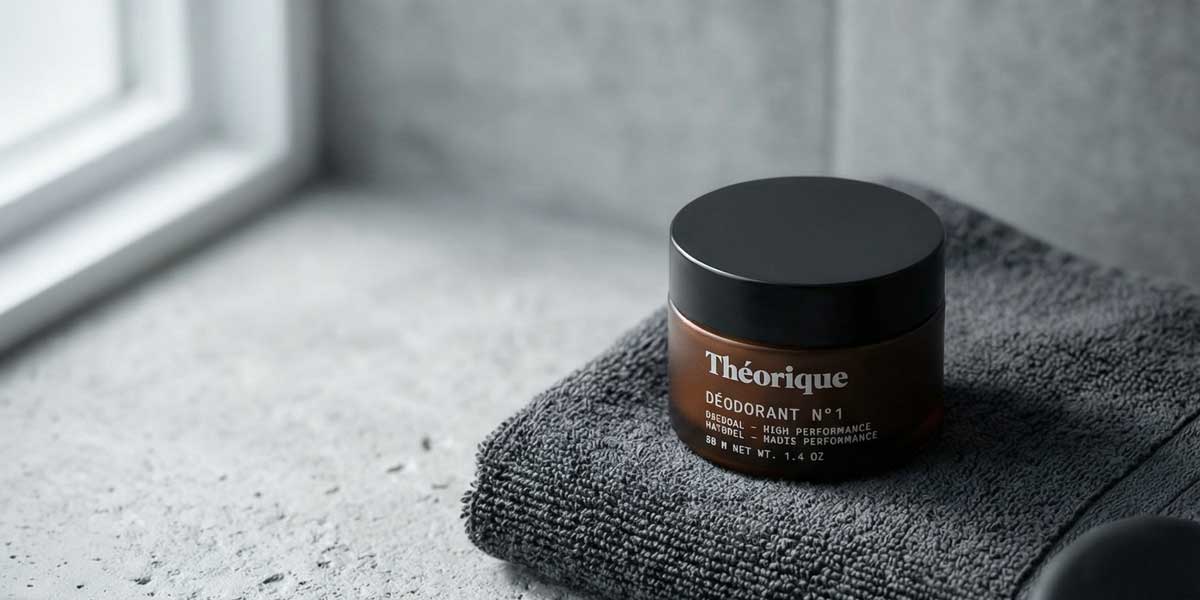
Théorique comes in a 40g frosted glass jar. You apply with your fingertips, a pea-sized amount for both underarms.
Application note: The jar format is less convenient than a stick for quick application, but it allows for more precise dosing. Théorique's concentrated formula means a 40g jar lasts 2-3 months with daily use, comparable to Lume's larger stick.
On packaging materials: Théorique uses glass, which is chemically inert and doesn't interact with the oil-based formula. Lume uses standard plastic. For an oil-based product applied to skin daily, some consumers prefer glass packaging because it eliminates any possibility of plastic-formula interaction.
Price Comparison
| Factor | Lume Solid Stick | Théorique Déodorant N°1 |
|---|---|---|
| Price | $15 | $25 |
| Size | 2.6 oz (74g) | 1.4 oz (40g) |
| Estimated Duration | ~1 months | ~3 months |
| Monthly Cost | ~$15 | ~$8 |
| Packaging | Plastic tube | Glass jar |
Lume is cheaper. That's straightforward. But the price difference isn't as obvious as it first appears when you factor in that Théorique's concentrated formula lasts ~3 months from a smaller jar. Meanwhile, Lume recommends reorder a tube every month.
The real question is value. Lume is more expensive per month and comes with documented risks: potential skin irritation from AHAs, a disputed 72-hour claim, synthetic ingredients despite "clean" marketing, and active lawsuits. Théorique costs less and delivers a genuinely natural formula with dual-action odor control and a longer, more generous guarantee.
Performance: Who Is Each Product For?

Lume markets itself as a "whole body deodorant" suitable for everyone, from office workers to people dealing with intimate odor. It positions itself as an everyday product.
Théorique targets people who need deodorant that performs under pressure: athletes, people with physically demanding jobs, anyone who's been let down by other natural deodorants during intense activity.
Multiple reviewers report that Lume's protection degrades during intense physical activity. The pH-lowering mechanism can be overwhelmed by heavy sweating, which dilutes the mandelic acid and raises the pH back toward neutral. This is consistent with the formula's single-action design: once the pH shift fails, there's no backup.
Théorique's dual-action formula was specifically designed and tested for high-stress conditions. Silver continues killing bacteria regardless of how much you sweat, and zinc ricinoleate continues trapping odor molecules. The mechanisms don't depend on maintaining a specific skin pH, so heavy sweating doesn't diminish performance.
If you work at a desk and want a basic everyday deodorant, Lume may be adequate for you, assuming you don't experience the irritation issues. If you train, work physically demanding jobs, or need reliable protection through long, stressful days, Théorique is engineered for that reality.
Who Owns What
Lume was originally an independent brand founded by Dr. Shannon Klingman. In 2021, it was acquired by Harry's Inc., the razor and personal care conglomerate. Harry's is a large corporation with a portfolio of consumer brands.
Théorique is an independent Canadian company. They make one product, and their entire focus is on making it work as well as possible.
This doesn't automatically make one better than the other, but it's worth knowing. Corporate ownership can shift product priorities toward margin optimization and marketing spend rather than formula integrity. Independent brands tend to be more responsive to customer feedback and more protective of their single product's reputation.
Final Summary
| Factor | Lume | Théorique |
|---|---|---|
| Odor Control | Single-action (pH manipulation) | Dual-action (antibacterial + odor trapping) |
| Active Ingredient | Mandelic acid (AHA) | Silver + zinc ricinoleate |
| Lawsuits | Yes (false advertising + irritation) | None |
| Skin Irritation Risk | AHA exfoliant, documented reactions | No exfoliants, no documented reactions |
| Sun Sensitivity | Yes (sunburn alert required) | None |
| Unscented Smell | Sour/acidic complaints | Truly odorless |
| "Natural" Claim | Contains synthetic ingredients | All natural ingredients |
| Ingredient Transparency | No percentages disclosed | Full percentages published |
| Guarantee | 60 days (you pay return shipping) | 90 days, full refund |
| Athletic Performance | Degrades under heavy sweating | Designed for athletic conditions |
| Packaging | Plastic tube | Glass jar |
| Ownership | Harry's Inc. (corporate) | Independent, Canadian |
| Price | $15/stick | $25/jar |
| Estimated Unit Duration | ~1 months | ~3 months |
| Monthly Cost | ~$15 | ~$8 |
| Duration Claim | 72 hours (disputed) | 24 hours |
Bottom line: Lume is more expensive but more widely available. If you need basic everyday odor control and you're not sensitive to AHAs, it may work for you. But the documented skin irritation issues, the disputed 72-hour claim, the synthetic ingredients behind a "clean" marketing facade, and the active lawsuits are significant concerns.
Théorique is less expensive, and you get a genuinely natural formula with dual-action odor control, full ingredient transparency, no AHA irritation risk, no lawsuit baggage, and a more generous guarantee. It's specifically designed for people who need performance they can count on.
The 90-day guarantee makes trying Théorique essentially risk-free. If it doesn't work for your body chemistry, you get a full refund with no shipping deductions. That confidence in the product tells you something about what's inside the jar.
Ready to Try Théorique?
Dual-action formula. No AHAs. No lawsuits. No synthetic ingredients. 90-day guarantee.
Ships within 24 hours • Canadian company • 40g glass jar