
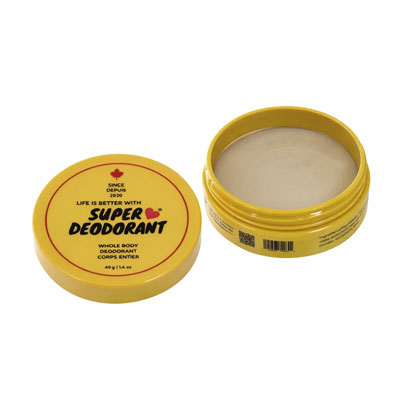
If you're searching for a silver-based natural deodorant, you've likely come across Super Deodorant. The founder developed the formula in 2004, and the company launched publicly in 2020. It's built a loyal following among people with sensitive skin.
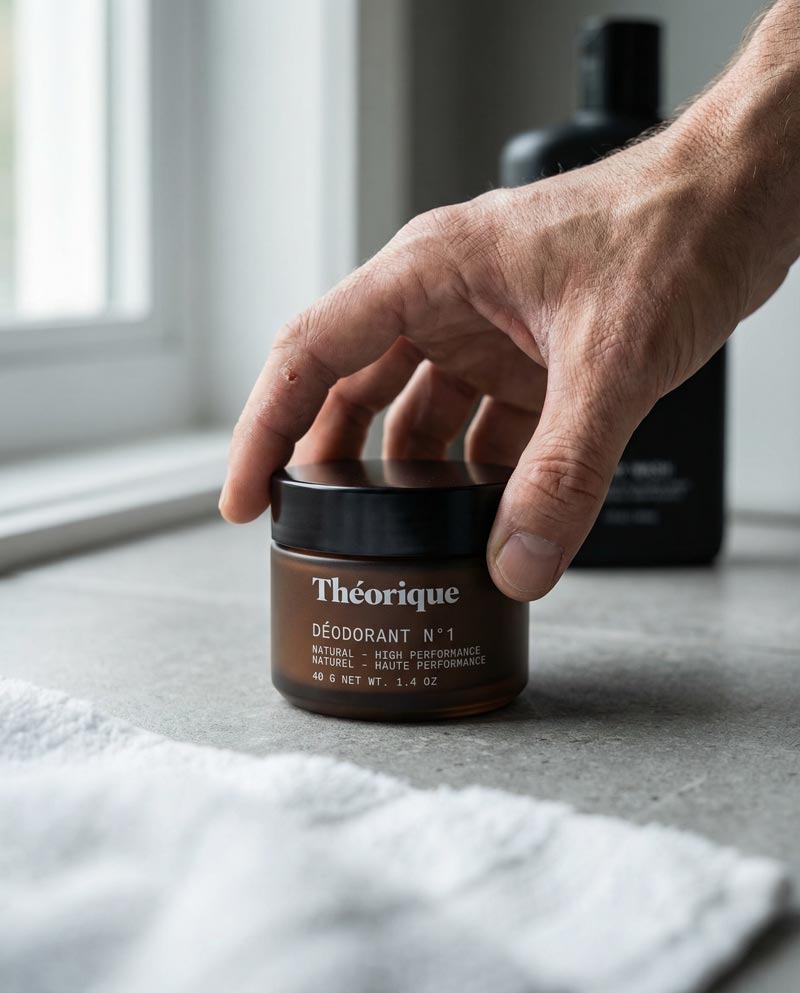
Recently, a new option has entered the market: Théorique. This Canadian company uses similar silver technology but claims to have improved upon the original formula. Their product is PhD-formulated in Canada with a focus on athletic performance.
We decided to compare both products side by side, looking at ingredients, performance claims, pricing, and policies. Here's what we found.
The Quick Verdict
| Factor | Super Deodorant | Théorique |
|---|---|---|
| Odor Control Method | Silver kills bacteria (single-action) | Silver + zinc ricinoleate (dual-action) |
| Formula Consistency | Varies batch to batch | Consistent every time |
| Refund Policy | No refunds or returns | 90-day money-back guarantee |
| Formulation | In-house developed | PhD-formulated in Canada |
| Soy Content | Contains soy butter | Soy-free |
| Base Oils | Grapeseed oil + soy butter | Jojoba oil + avocado butter |
| Size | 40g | 40g |
| Company Origin | Canadian company | Canadian company |
The Key Difference: Single vs Dual-Action Formula
This is the most important difference between these two products.
How Super Deodorant works: Silver kills odor-causing bacteria. When bacteria can't grow, they can't produce the compounds that make you smell. Simple and effective, but it's only one line of defense.
How Théorique works: Silver kills bacteria (same as Super Deodorant), but the formula also includes zinc ricinoleate. This ingredient traps and neutralizes odor molecules before they can escape your skin.
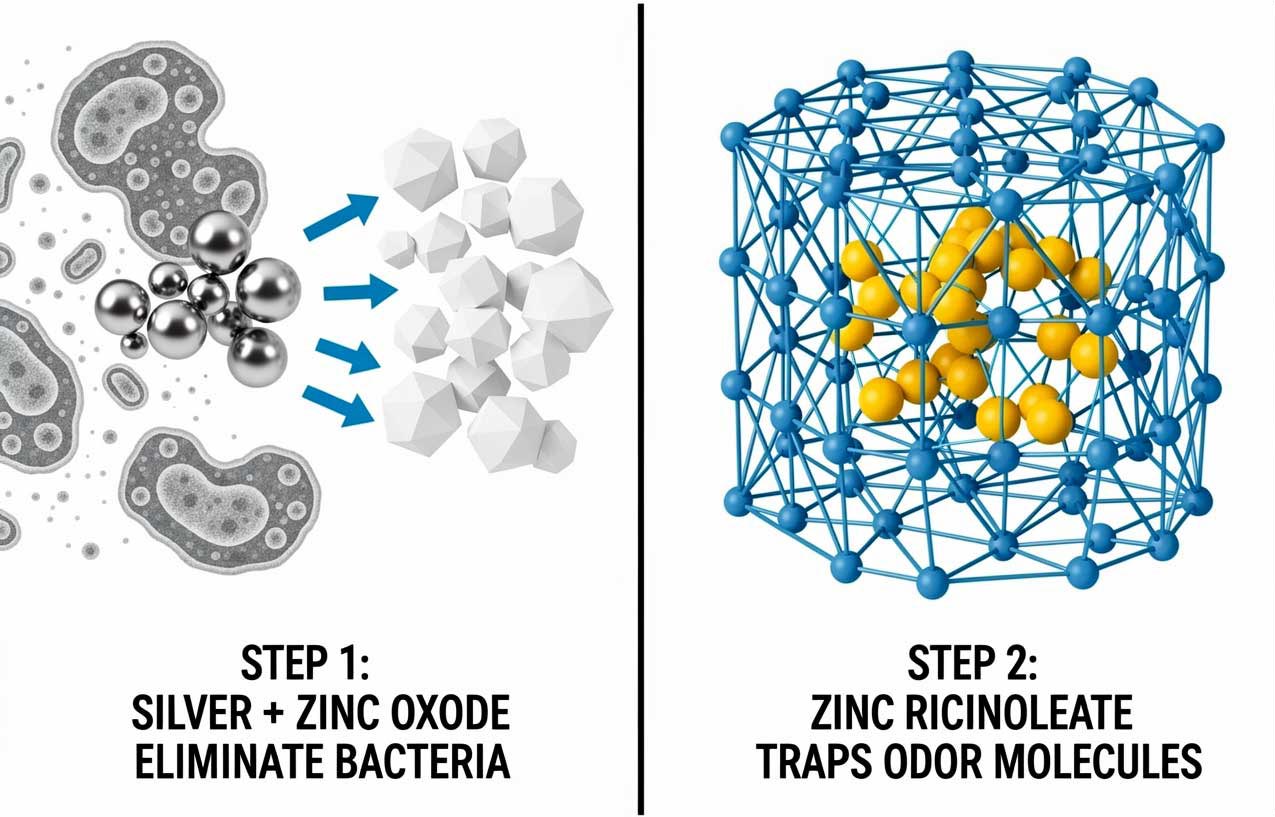
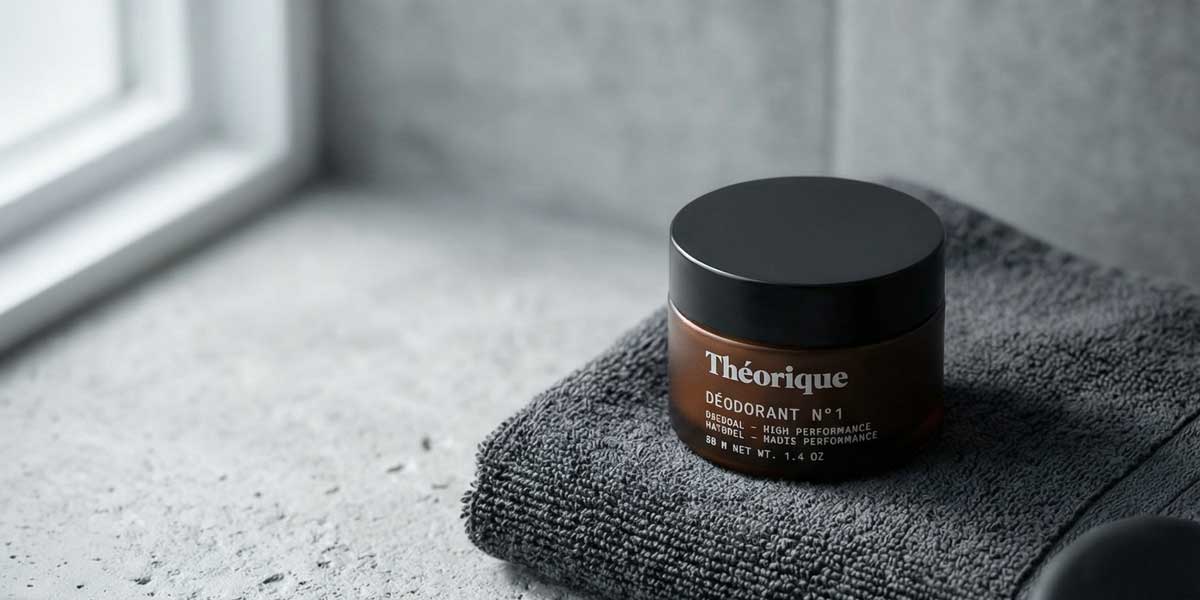
Théorique's PhD-formulated approach combines proven science with natural ingredients
Why does dual-action matter? Even after bacteria die, odor molecules can keep forming and escaping. Zinc ricinoleate acts as a backup system, trapping these molecules before you or anyone else can smell them. It's the difference between stopping the source and also catching what slips through.
Super Deodorant doesn't contain zinc ricinoleate. They use zinc oxide (which protects skin) but not the ricinoleate form that specifically traps odor molecules.
The Consistency Issue
Super Deodorant is upfront about something: their product changes from batch to batch.
"Some batches might be thick and paste-like, while others may feel creamier or separated and mildly gritty. This natural variability is a hallmark of its authenticity."
They've written a blog post about this called "Super Deodorant's variability: is it a feature or a flaw?" Their answer: it's a feature.
Some users don't mind getting a different texture each time. Others find it frustrating. Reviews mention descriptions like "looks like wet clay" and "goes on like mud."
Théorique takes a different approach. Their PhD-formulated process uses specific emulsifiers (stearyl alcohol helps bind everything together) to ensure every jar delivers exactly the same formula.
Full Ingredient Comparison
Super Deodorant
- Grapeseed oil
- Soy butter
- Rice bran wax
- Zinc oxide
- Magnesium hydroxide
- Arrowroot powder
- Vitamin E
- Silver
Théorique
- Jojoba oil
- Avocado butter
- Tapioca starch
- Zinc ricinoleate
- Rice bran wax
- Stearyl alcohol
- Zinc oxide
- Vitamin E
- Silver (non-nano)
Why Base Oils Matter
The choice of base oil explains why Super Deodorant needs freezer storage while Théorique doesn't.
Grapeseed Oil (Super Deodorant)
Grapeseed oil feels light and absorbs quickly, but it has a problem: it goes bad relatively fast. The oil contains compounds called polyunsaturated fatty acids (PUFAs) that break down when exposed to heat, light, or air.

Some oils contain chemical bonds that react with oxygen over time. This is called oxidation, and it's what makes cooking oil smell "off" when it's old. Grapeseed oil is especially prone to this because of its chemical makeup.
This is why Super Deodorant tells customers to store spare jars in the freezer and keep the active jar in the refrigerator. The cold slows down the breakdown process.
Jojoba Oil (Théorique)
Despite its name, jojoba isn't actually an oil. It's a liquid wax. This might sound like marketing spin, but it makes a real difference.
Unlike grapeseed oil, jojoba doesn't contain the chemical bonds that react with oxygen. Research shows jojoba has a shelf life of 5+ years and "does not oxidize or turn rancid."
Bonus: Jojoba closely matches the natural oils your skin already produces, so it absorbs smoothly without feeling greasy.
This is why Théorique doesn't need special storage. You can keep it in your bathroom at room temperature without worrying about it going bad.
The pH Question
Super Deodorant uses magnesium hydroxide as a key ingredient. It's marketed as a gentler alternative to baking soda.
But here's what the chemistry actually shows:

The pH Numbers
| Healthy skin pH | 4.5-5.5 (slightly acidic) |
| Baking soda pH | 8.3-9.0 (alkaline) |
| Magnesium hydroxide pH | 9.0-10.5 (more alkaline) |
Magnesium hydroxide is actually more alkaline than baking soda. Both work the same way: they raise your skin's pH to create an environment where bacteria can't thrive easily.
The issue? Your skin naturally prefers to be slightly acidic. This "acid mantle" protects against irritation and infection. Constantly raising the pH can disrupt this protective layer over time.
Industry formulator Bubble and Bee Organic notes: "If baking soda is an irritant due to its alkalinity, magnesium hydroxide would be even more irritating."
How Théorique Handles This Differently
Rather than relying heavily on pH changes, Théorique's PhD-formulated approach uses two different mechanisms:
- Silver kills bacteria directly without changing your skin's pH
- Zinc ricinoleate traps odor molecules through chemical bonding, not pH disruption
- Zinc oxide provides extra antibacterial support and protects skin
How Zinc Ricinoleate Works
This is the key ingredient that separates Théorique from Super Deodorant.
Zinc ricinoleate doesn't kill bacteria. It doesn't change pH. Instead, it works like a molecular trap.
Body odor comes from tiny molecules that bacteria produce when they break down your sweat. These molecules float into the air, and that's what people smell.
Zinc ricinoleate grabs onto these odor molecules and holds them so they can't escape into the air. Think of it like a filter that catches the smell before it leaves your skin.
This is why we call Théorique "dual-action":
- Action 1: Silver kills odor-causing bacteria
- Action 2: Zinc ricinoleate traps any odor molecules that form anyway
Super Deodorant only has the first action. If bacteria produce odor molecules before being killed, or if new bacteria show up during the day, those odor molecules escape and you might start to smell.
The Soy Question
Super Deodorant contains soy butter. According to Food Allergy Research & Education (FARE), soy is one of the top 8 allergens in the United States.
While putting soy on your skin is different from eating it, some people with soy allergies do react to soy-containing skincare products. Studies show that even refined soy oils can contain traces of proteins that trigger reactions in sensitive individuals.
Théorique is completely soy-free, using avocado butter instead.
Packaging: Plastic vs Glass
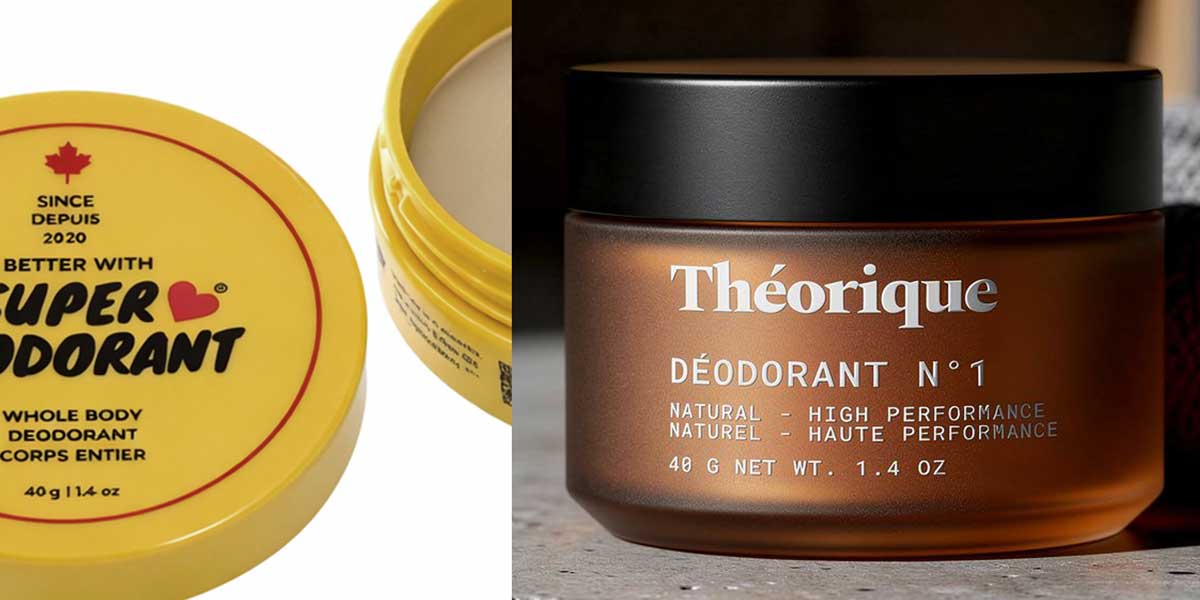
Super Deodorant: Plastic Tin
- 40g plastic container
- Oil-based formula stored in plastic
- Temperature changes may increase chemical transfer
Théorique: Glass Jar
- 40g glass container
- Glass doesn't react with the product
- Protects formula integrity
- Recyclable, premium feel
Why Some Brands Choose Glass for Oil-Based Products
General research suggests that oils and plastic packaging can potentially interact over long periods, particularly with temperature fluctuations (like shipping in summer). However, the degree to which this applies to any specific product depends on the type of plastic used and the specific formulation.
Some considerations for oil-based cosmetics:
- Some plasticizers are oil-soluble, which is why many premium skincare brands choose glass
- Temperature swings during shipping and storage can potentially accelerate any interaction
- Longer storage times mean more opportunity for potential interaction
Glass is chemically inert, meaning it doesn't react with or release anything into the product. For an oil-based product applied to skin daily, some consumers prefer glass packaging for this reason.
Silver Comparison: Are Both Safe?
Both products use silver as their main bacteria-fighting ingredient, but they describe it differently.
Nano silver: Extremely tiny particles (smaller than 100 nanometers) that may be able to pass through skin and enter the bloodstream. Some research has raised safety questions.
Micronized / Non-nano silver: Larger particles (100+ nanometers) that are too big to pass through intact skin. They stay on the surface and wash off.
Super Deodorant uses "micronized silver." Théorique uses "non-nano silver." These are different names for the same thing: particles big enough to be safe for skin contact.
Super Deodorant's website confirms: "Micronized silver is 100 to 1,000 times larger in diameter than nanosilver particles. These particles are too large to penetrate human skin or be absorbed into the body."
Bottom line: Both products use safe, non-penetrating silver. Neither uses the nano-scale particles that have raised concerns in research.
Refund & Return Policies
This is where the products differ significantly.
"No refunds or returns." — Direct quote from their website.
Théorique offers a 90-day money-back guarantee. If the product doesn't work for you, they'll refund your purchase without questions.
This matters because everyone's body chemistry is different. A deodorant that works great for one person might not work for another. The only way to know is to try it. Having a guarantee means you're not stuck paying for something that doesn't work for your body.
Important Update: Product Discontinuation
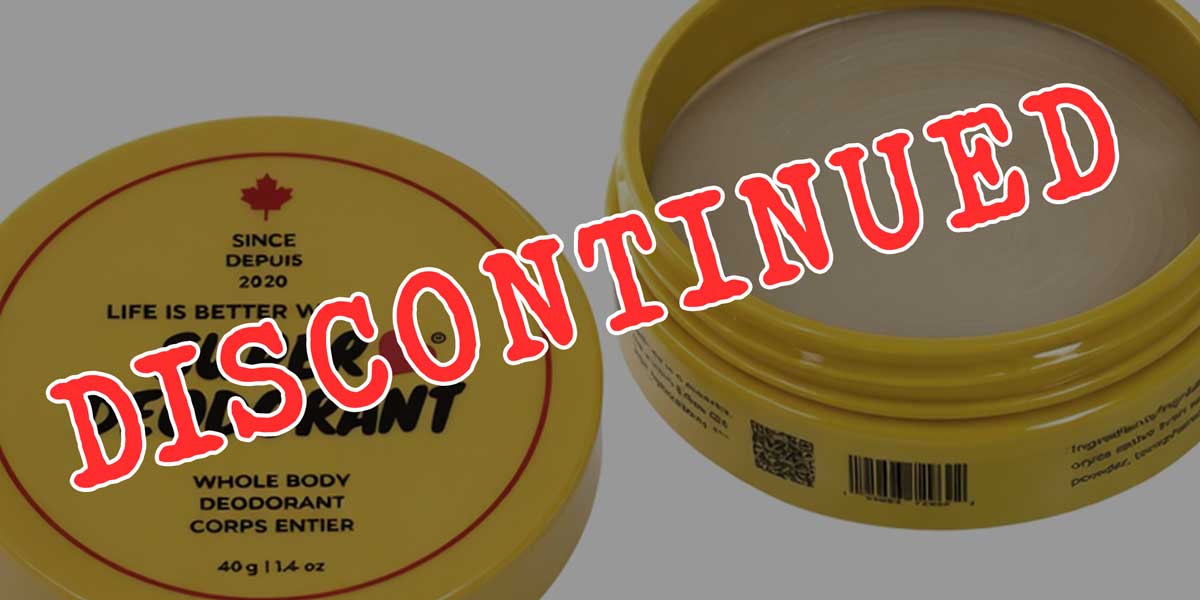
Super Deodorant is Retiring Their Paste Formula
In January 2025, Super Deodorant announced they're discontinuing their paste deodorant. They're replacing it with a new stick formula called "Spectrum 72."
From their official blog post "From Paste to Progress":
"The paste has been challenging to support at scale. Texture variability, storage requirements, and the constant need for explanation and defense were significant factors in this decision."
The paste will remain available "until the stick launches or remaining jars sell out."
Customer reactions have been overwhelmingly negative: "Please don't retire the paste!!!!!" and "I'm not happy that they keep announcing it will be discontinued."
If you become a Super Deodorant customer today, it's worth asking: how long will your preferred product be available?
Théorique has no discontinuation plans. Their jar formula was designed from the start to be stable and scalable.
Storage Requirements & Shelf Life
This is perhaps the biggest practical difference between these products.
Super Deodorant Storage
- Shelf life: 6 months from opening
- Spare jars: Must be stored in freezer in airtight bags
- Active jar: Refrigerate if using slowly (3-8 months per jar)
- Risk: Product will go rancid if stored improperly
Théorique Storage
- Shelf life: Stable formulation, no urgent expiration
- Spare jars: Room temperature storage
- Active jar: No refrigeration needed
- Risk: None with normal storage conditions
From Super Deodorant's official storage instructions:
"Secure spare containers in airtight bag and store them in FREEZER until needed."
"If using slowly (3-8 months per jar), store tin in refrigerator after daily use."
Customer reviews confirm this is a real issue. One user wrote: "I threw out the remaining portion because it had gone rancid. It made my armpits itch, and it had a bad smell." Another reported: "I ordered 10 and keep them in the fridge."
This storage burden exists because of Super Deodorant's grapeseed oil base, which breaks down when exposed to air (as we explained earlier). Théorique's jojoba-based formula doesn't have this problem.
Performance Testing

Théorique's PhD-formulated product is tested in athletic conditions
Super Deodorant's claims are based on customer feedback since their 2020 public launch, along with the founder's personal use since 2004. They claim all-day protection for new users and multi-day protection for long-term users.
Théorique takes a different approach. Their PhD-formulated product emphasizes performance testing in athletic conditions: during intense workouts, in high heat, and under physical stress. Their marketing specifically targets athletes and people with active lifestyles.
Both products claim all-day protection. Without independent lab testing, it's hard to say which performs better. What we can say is that Théorique's dual-action formula (antibacterial + odor absorption) provides two mechanisms of odor control versus Super Deodorant's single mechanism.
Final Summary
| Factor | Super Deodorant | Théorique |
|---|---|---|
| Odor Control | Single-action (antibacterial + pH) | Dual-action (antibacterial + odor absorption) |
| Formulation | In-house developed | PhD-formulated in Canada |
| Consistency | Varies by batch | Consistent |
| Storage Required | Freezer (spare jars) / Refrigerator (active jar) | Room temperature |
| Shelf Life | 6 months from opening | Stable formulation |
| Guarantee | None (no refunds) | 90 days |
| Product Future | Being discontinued | Ongoing production |
| Base Oil | Grapeseed (goes rancid) | Jojoba (stable) |
| Packaging | Plastic tin | Glass jar |
| Allergens | Contains soy | Soy-free |
| pH Approach | Magnesium hydroxide (pH 9-10.5) | Lower pH reliance |
| Silver Type | Micronized (safe) | Non-nano (safe) |
| Company | Canadian (launched 2020) | Canadian (newer brand) |
| Size | 40g | 40g |
Bottom line: Super Deodorant pioneered silver-based natural deodorant, but significant concerns have emerged: the product is being discontinued, requires freezer storage, has a 6-month shelf life due to its grapeseed oil base, and relies heavily on high-pH chemistry.
Théorique addresses all of these issues: PhD-formulated stable jojoba-based formula requiring no refrigeration, dual-action odor control that doesn't depend on high pH, consistent batch quality, and a 90-day money-back guarantee.
If you're currently using Super Deodorant, now may be the time to explore alternatives before the product disappears. If you're new to silver-based deodorants, Théorique offers the same core technology with a more refined, stable formulation.
The 90-day guarantee makes trying Théorique essentially risk-free. If it doesn't work for you, you get your money back. That's not something Super Deodorant offers.
Ready to Try Théorique?
PhD-formulated in Canada. Dual-action formula. 90-day guarantee.
Ships within 24 hours • Canadian company • 40g jar